What Is Tire Load Index? Explained Simply
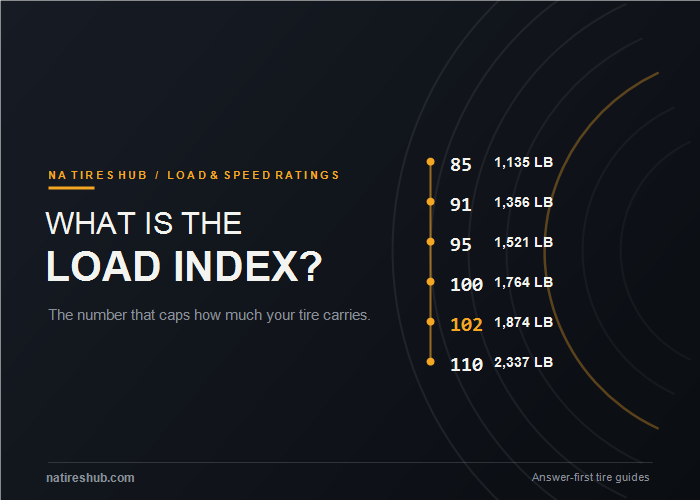
Table of contents
- What the load index actually is
- Where to find your load index
- The tire load index chart
- How to find your total load capacity
- A quick worked example
- The load index depends on correct inflation
- Why you should never go below your load index
- Load index for trucks, SUVs, and heavy loads
- Why electric vehicles need a higher load index
- Load index and speed rating go together
- The verdict
Two small digits on your sidewall decide how much weight your tires can safely carry, and most drivers walk right past them. In 225/65R17 102H, the 102 is the load index, and it matters just as much as the size when you buy a replacement. Get it wrong and you overload the tire without ever knowing. Here is what the number means and how to read it.
Quick answer
A tire's load index is a code for the maximum weight one tire can carry at full inflation. It sits just before the speed rating, like the 102 in 102H, and each number maps to a set weight, so 102 equals 1,874 lbs per tire. Always match or exceed the load index on your door placard, and never fit a lower one.
What the load index actually is
The load index is a two or three digit code that stands for a specific maximum weight one tire can support when properly inflated. It is not the weight in pounds directly. Instead, each number points to a value on a standardized load index chart, where a higher number means a stronger tire that carries more. Your vehicle was engineered around a minimum load index, so any tire you fit has to meet or beat it to stay safe.
Where to find your load index
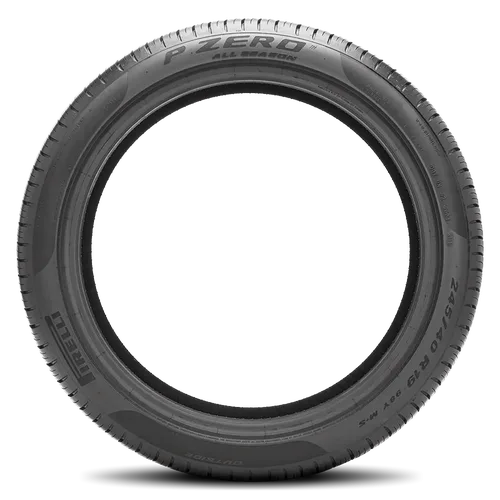
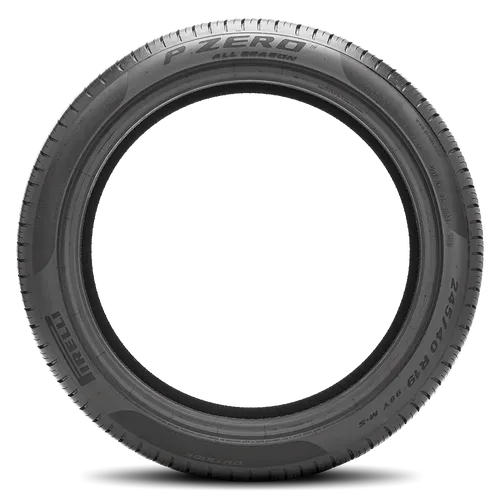
The load index sits at the start of the service description, the block right after the size. In 225/65R17 102H, the 102 is the load index and the H after it is the speed rating. The value your vehicle needs is also printed on the placard in the driver-side door jamb and in the owner's manual. For the rest of the code, see our guide on how to read your tire size.
The tire load index chart
Each load index number maps to a set weight. These are the values you will see most often on passenger tires and light SUVs:
| Load index | Max load per tire |
|---|---|
| 80 | 992 lbs |
| 85 | 1,135 lbs |
| 91 | 1,356 lbs |
| 95 | 1,521 lbs |
| 100 | 1,764 lbs |
| 102 | 1,874 lbs |
| 105 | 2,039 lbs |
| 110 | 2,337 lbs |
The full chart runs much wider, but this range covers most cars, crossovers, and light SUVs. Remember the figure is per tire, not for the whole vehicle.
How to find your total load capacity
Because the chart is per tire, multiply by four to see what your full set can carry. A set of 102-rated tires supports about 1,874 lbs each, or roughly 7,496 lbs across all four. That total needs to comfortably cover your vehicle plus passengers and cargo. Your vehicle's own limit, the gross vehicle weight rating, is on the same door placard, and your tires should always be rated to carry it with margin to spare.
A quick worked example
Say your placard calls for a load index of 100. On the chart that is 1,764 pounds per tire, so four tires carry about 7,056 pounds together. If your fully loaded vehicle with passengers and cargo weighs 5,200 pounds, you have a healthy margin. Fit a set rated 95 instead, at 1,521 pounds each, and the total drops to about 6,084 pounds. It still clears the weight on paper, but you have thrown away a large part of the safety cushion the engineers built in for hot days and heavy loads.
Find tires in your size
It's on your tire's sidewall or the driver-side door placard — e.g. 205/55R16
The load index depends on correct inflation
A tire only reaches its rated capacity when it is inflated to the pressure on your door placard. Air, not rubber, carries the weight, so an underinflated tire cannot support what its load index promises. Run a 102-rated tire soft and it behaves like a lower-rated one, building heat and flexing more with every mile. This is why checking pressure monthly matters as much as choosing the right load index in the first place. The sidewall number is a ceiling that assumes the tire is set up correctly.
Why you should never go below your load index
Fitting a tire with a lower load index than your placard specifies is one of the more dangerous shortcuts in tire buying. An underrated tire runs hotter under the same weight, flexes more, and is far more likely to fail, especially on a loaded vehicle or a long highway drive in the heat. Going higher is always fine and simply adds margin. Going lower narrows the safety cushion your vehicle was designed with, so treat the placard number as a floor you never drop beneath.
Load index for trucks, SUVs, and heavy loads
If you tow, haul, or drive a truck or full-size SUV, the load index deserves extra attention. Look for tires marked XL or Extra Load, which carry more weight than a standard tire of the same size by running at a higher maximum pressure. Light trucks often use LT tires, built for heavier loads again, and these may list two load indexes for single and dual-wheel use. When in doubt for a working vehicle, match the original tire's markings exactly and ask a tire professional before you change anything.
Why electric vehicles need a higher load index
Electric vehicles are noticeably heavier than similar gas cars because of their battery packs, so they put more weight on each tire. Many EVs leave the factory with XL or a newer HL (High Load) rating to cope, along with reinforced sidewalls. If you drive an EV, never fit a standard-load tire in place of an XL or HL one, even in the same size, because it may not safely carry the vehicle. Always match the load index and load range printed on your placard.
Load index and speed rating go together
The load index never appears on its own. It is paired with the speed rating in the service description, like the 102H we keep coming back to. The number sets how much weight the tire carries, the letter sets how fast it can run, and your placard lists the minimum for both. To understand the letter half, read our guide on what a tire's speed rating means.
Key takeaways
- The load index is the number just before the speed rating, like the 102 in 102H.
- It codes the maximum weight one tire can carry, read from a chart (102 = 1,874 lbs).
- Multiply the per-tire figure by four for your set's total capacity.
- Never fit a lower load index than your door placard lists; higher is always fine.
- For towing or trucks, look for XL, Extra Load, or LT markings.
The verdict
The load index is small, but it is a hard safety limit, not a detail to skip. Read the number, find its weight on the chart, and make sure your tires meet or beat the value on your door placard with room for the load you actually carry. Match the load index and the speed rating together and you keep the full safety margin your vehicle was built with.
Ready for new tires?
Search live prices in your exact size, shipped from our US warehouses.
Shop tires by sizeFrequently Asked Questions
Have questions? We've got answers.
Sources & references
Disclaimer: This content is for general informational purposes only and is not a substitute for professional automotive advice. Always confirm tire size, load rating, and inflation pressure against your vehicle's door placard and owner's manual, and consult a qualified tire professional before making changes to your vehicle's tires.