What Is Speed Rating on Tires? Chart, Letters and Codes Explained
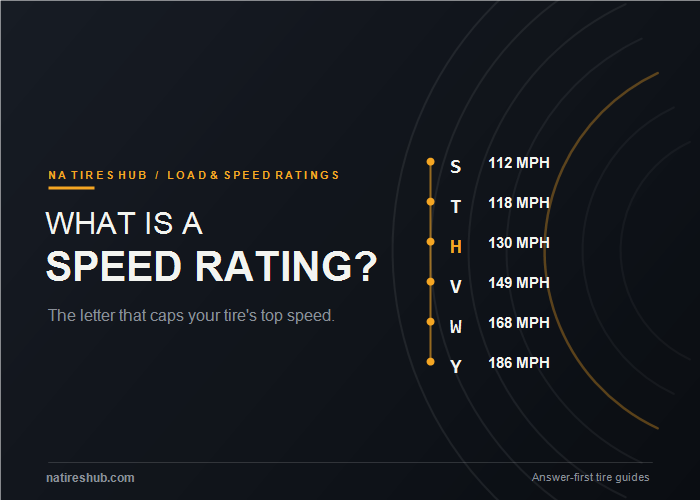
Table of contents
The last character in a tire size is a letter, and it is the speed rating. In 225/65R17 102H, the H is it. That letter tells you the maximum speed the tire was certified to sustain, and it is one of the two figures on your sidewall you should never downgrade.
Quick answer
A tire speed rating is a letter that states the maximum sustained speed the tire is certified for. H means 130 mph, V means 149 mph, W means 168 mph and Y means 186 mph. The letter sits at the end of the size, straight after the load index number.
The tire speed rating chart
Every speed rating in common use, with the certified maximum in both mph and km/h.
| Rating | Max speed (mph) | Max speed (km/h) | Usually found on |
|---|---|---|---|
| L | 75 | 120 | Off-road and light truck tires |
| M | 81 | 130 | Temporary spare tires |
| N | 87 | 140 | Temporary spare tires |
| P | 93 | 150 | Some light truck tires |
| Q | 99 | 160 | Winter tires, light truck |
| R | 106 | 170 | Light truck and commercial |
| S | 112 | 180 | Family sedans and vans |
| T | 118 | 190 | Sedans and minivans |
| U | 124 | 200 | Sedans and coupes |
| H | 130 | 210 | Most modern cars and sport sedans |
| V | 149 | 240 | Performance cars |
| W | 168 | 270 | High performance and exotics |
| Y | 186 | 300 | Exotics |
| (Y) | Above 186 | Above 300 | Exotics, rating shown in brackets |
The letters do not run in a tidy alphabetical order. H sits between U and V rather than between G and I, which is a leftover from how the system grew. Keep that in mind so you do not assume S is faster than H because it comes later in the alphabet.
What does 102H mean on a tire?
This is the most common question about the end of a tire size, and the answer is that it is two separate ratings printed together with no space.
- 102 is the load index. It is a code, not a weight in pounds. Index 102 means the tire can carry 1,874 lb at its rated pressure.
- H is the speed rating, which means 130 mph.
So a 225/65R17 102H is a 17 inch tire rated to carry 1,874 lb per corner at up to 130 mph. Together the number and the letter are called the service description, and they always appear in that order.
The same reading works for any pairing. A 110T carries 2,337 lb at up to 118 mph. A 95V carries 1,521 lb at up to 149 mph. The full load index table runs from well below 70 to above 120, and we cover it in what tire load index means.
Common tire codes decoded: 99H, 98H, 100H, 94W and more
Once you can read 102H, you can read every code like it. The number is always the load index and the letter is always the speed rating. These are the combinations drivers ask about most, worked out in full.
| Code | Load index | Carries per tire | Speed rating | Max speed |
|---|---|---|---|---|
| 86H | 86 | 1,168 lb | H | 130 mph |
| 94W | 94 | 1,477 lb | W | 168 mph |
| 95Y | 95 | 1,521 lb | Y | 186 mph |
| 97W | 97 | 1,609 lb | W | 168 mph |
| 97Y | 97 | 1,609 lb | Y | 186 mph |
| 98H | 98 | 1,653 lb | H | 130 mph |
| 99H | 99 | 1,709 lb | H | 130 mph |
| 99T | 99 | 1,709 lb | T | 118 mph |
| 99V | 99 | 1,709 lb | V | 149 mph |
| 100H | 100 | 1,764 lb | H | 130 mph |
| 101H | 101 | 1,819 lb | H | 130 mph |
| 102H | 102 | 1,874 lb | H | 130 mph |
| 103W | 103 | 1,929 lb | W | 168 mph |
| 103Y | 103 | 1,929 lb | Y | 186 mph |
| 111S | 111 | 2,403 lb | S | 112 mph |
| 114Q | 114 | 2,601 lb | Q | 99 mph |
| 114T | 114 | 2,601 lb | T | 118 mph |
| 118S | 118 | 2,910 lb | S | 112 mph |
| 120Q | 120 | 3,086 lb | Q | 99 mph |
Three patterns make the table easy to use.
- Same number, different letter. A 99H and a 99V carry exactly the same weight. They differ only in certified speed.
- Replacing to match your placard. If your door placard says 99H, a 99V is an acceptable replacement because it carries the same load at a higher speed. A 98H is not, because it carries less.
- Two numbers on a light truck tire. Codes such as 121/118S show two load indexes. The first is the load per tire fitted singly, the second is the load per tire when two are fitted side by side as a dual pair.
Where to find your speed rating
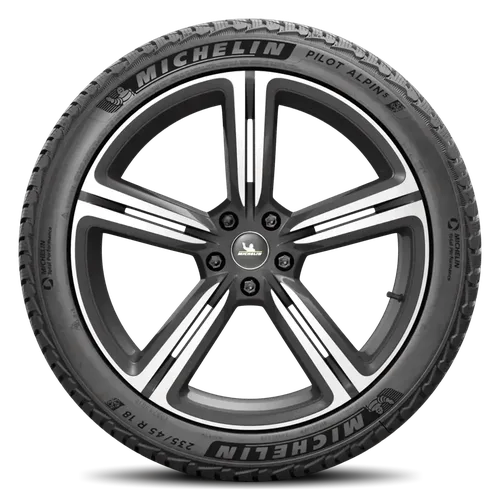
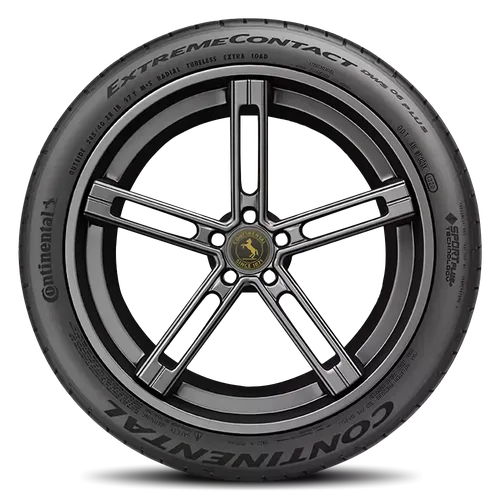
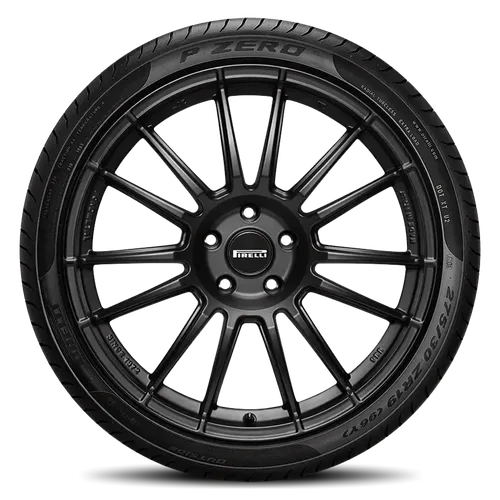
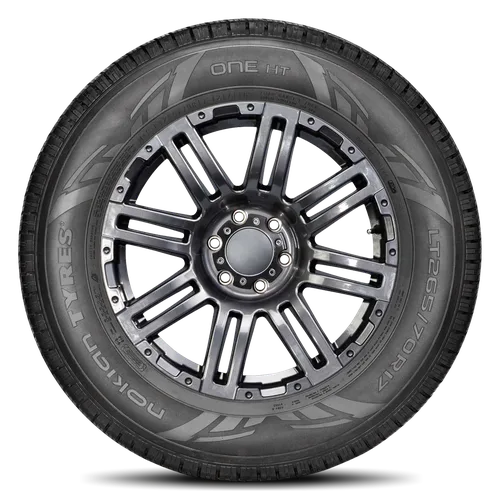
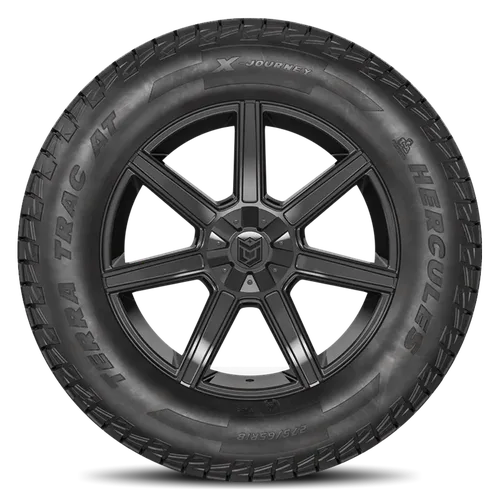
It is the final character of the tire size molded into the sidewall, immediately after the load index. In 225/65R17 102H, read left to right: 225 is the width in millimeters, 65 is the aspect ratio, R means radial construction, 17 is the wheel diameter in inches, 102 is the load index, and H is the speed rating.
The size your vehicle was built around is on the driver-side door placard, and that placard is the figure to trust if it ever disagrees with what is currently fitted. Someone may have fitted the wrong tire before you owned the car.
If you know your size and want to see what is available in it:
Find tires in your size
It's on your tire's sidewall or the driver-side door placard — e.g. 205/55R16
What ZR, W and Y actually mean
These three cause the most confusion because the rules changed as cars got faster.
ZR is not a speed rating on its own. It is a marker meaning the tire is rated above 149 mph, and it appears in the construction position rather than at the end, as in 245/40ZR18. On older tires ZR was all you got. On modern ones it is paired with a W or Y that gives the exact figure.
W means 168 mph and Y means 186 mph. When a Y appears in brackets, written as (Y), the tire is certified above 186 mph. Those are genuine performance tires, and they are summer-biased unless the sidewall says otherwise.
Can you change your speed rating?
Upward, generally yes. Downward, no.
Fitting a tire with a higher speed rating than your vehicle calls for is normally acceptable and is common when a size is only available in a faster rating. You gain nothing in everyday driving, and the ride is often slightly firmer because higher-rated tires tend to have stiffer construction.
Fitting a lower speed rating is a different matter. The rating is tied to how the tire handles sustained heat, and heat is what destroys tires. Your vehicle's braking, suspension and stability systems were validated around the original specification. Dropping below it can also affect your insurance position, and in some places it is not legal.
The same rule applies to the load index next to it. Neither figure is a target to economise on.
Key takeaways
- The speed rating is the final letter of the tire size, and it states a certified maximum sustained speed.
- H is 130 mph, V is 149 mph, W is 168 mph, Y is 186 mph.
- The letters are not alphabetical. H sits between U and V.
- In 102H, the 102 is the load index (1,874 lb) and the H is the speed rating (130 mph). Every code like 99H, 98H or 94W reads the same way.
- ZR is a marker for tires rated above 149 mph, not a rating in its own right.
- Going up a speed rating is usually fine. Going down is not, and neither is dropping the load index.
How a speed rating is earned
It is a laboratory result, not a road test. The tire is run against a large drum under a set load, and the speed is stepped up in increments and held at each step until it reaches the target for that letter. The tire has to survive without failing.
Two things follow from that. First, the rating assumes a tire in good condition, correctly inflated and undamaged. A worn, under-inflated or previously repaired tire is not the tire that was tested. Second, it is a ceiling for the tire, not a speed you can legally or safely drive.
The verdict
Read the letter at the end of your tire size, check it against the chart above, and match or exceed it when you replace. That is the whole job. The number next to it is the load index and it deserves the same treatment.
If you are choosing between two tires and one carries a higher rating than your car needs, that is not a reason to reject it. If one carries a lower rating than your door placard specifies, that is a reason to walk away, however good the price looks.
Ready for new tires?
Search live prices in your exact size, shipped from our US warehouses.
Shop tires by sizeFrequently Asked Questions
Have questions? We've got answers.
Sources & references
Disclaimer: This content is for general informational purposes only and is not a substitute for professional automotive advice. Always confirm tire size, load rating, and inflation pressure against your vehicle's door placard and owner's manual, and consult a qualified tire professional before making changes to your vehicle's tires.