Are Firestone Tires Good? An Honest Brand Review
Table of contents
- Who makes Firestone tires?
- Where are Firestone tires made?
- What about the Firestone recall?
- Are Firestone tires good? The honest verdict
- What Firestone does well
- Where Firestone falls short
- Firestone's lineup at a glance
- Are Firestone Destination LE3 tires good?
- The best Firestone tires to buy right now
- What the UTQG numbers on a Firestone tell you
- How Firestone compares to other brands
- The verdict
Firestone is one of the oldest names in American tires, and depending on your age it means one of two things: Indianapolis 500 history, or the Ford Explorer recall of 2000. Both are real, and an honest review has to deal with both. Here is a straight look at who makes Firestone today, where the tires are built, what that recall actually covered, what the brand does well, where it falls short, and which Firestone tires are worth buying now.
Quick answer
Yes, Firestone is a good mainstream tire brand. It was founded in Akron, Ohio in 1900, it has been part of Bridgestone since 1988, and many of its passenger and light truck tires are built in US plants. It sits below Bridgestone on price, and its Destination truck and SUV tires are its strongest everyday line.
Disclosure: New American Tires Hub is an independent tire retailer. We sell the Firestone tires discussed on this page and we make money when you buy from us. We are not affiliated with, sponsored by, or endorsed by Firestone, Bridgestone Americas, Inc. or Bridgestone Corporation. The views below are our own, and we say where the brand falls short as well as where it does well.
Who makes Firestone tires?
Firestone tires are made by Bridgestone. Harvey Firestone founded The Firestone Tire and Rubber Company in Akron, Ohio on August 3, 1900, and it grew into one of America's best-known tire makers. In 1988 it merged with Bridgestone Corporation of Japan. Today Firestone is run in the United States by Bridgestone Americas, Inc., headquartered in Nashville, Tennessee, alongside the Bridgestone brand itself.
So Firestone and Bridgestone are sister brands from one company. Bridgestone is the premium label. Firestone is the more mainstream one, with its own lineup and generally lower prices. If you want the full picture of the parent, our review of whether Bridgestone tires are good covers it.
Where are Firestone tires made?
Many Firestone tires sold in the United States are built here. According to the U.S. Tire Manufacturers Association, Bridgestone Americas makes Bridgestone, Firestone and associate brand tires across a US plant network that includes passenger and light truck tire plants in Wilson, North Carolina and Graniteville, South Carolina, and truck and bus tire plants in La Vergne and Morrison, Tennessee. Firestone's racing tires are built in its hometown of Akron, Ohio. Some Firestone tires are imported from Bridgestone plants overseas, so the origin depends on the model and size.
To check a specific tire, look at the sidewall. The country of manufacture is molded on it, and the DOT code includes a plant code that identifies the factory.
What about the Firestone recall?
This is the question most people searching for Firestone are really asking, so here are the facts from the National Highway Traffic Safety Administration's investigation.
On August 9, 2000, Firestone announced a recall of about 14.4 million P235/75R15 tires: every Radial ATX and ATX II in that size, plus Wilderness AT tires in that size built at its Decatur, Illinois plant. Firestone estimated that about 6.5 million of them were still in service in the United States. The tires were mainly fitted to Ford vehicles, especially the Explorer, and NHTSA linked tread separations on them to crashes, injuries and deaths.
Two things are worth keeping in perspective. The recall covered specific tire lines in one size, built more than 25 years ago, and today's Firestone range is built around different families such as Destination, Firehawk and WeatherGrip. And every tire legally sold in the United States today has to meet the same federal safety standards, whatever the brand.
You do not have to take anyone's word for a tire's recall status. NHTSA's recall search lets you look up any tire by brand and model, and the DOT code on the sidewall tells you exactly when and where yours was made.
Are Firestone tires good? The honest verdict
For most drivers, yes. Firestone is a solid mainstream brand: priced below Bridgestone and the other premium names, clearly ahead of value imports in engineering backing, and strongest where many American drivers need it most, on trucks, SUVs and crossovers. It does not chase the last word in refinement. It aims at dependable, long-wearing tires at a fair price, and the Destination family in particular does that well.
What Firestone does well
- Trucks, SUVs and crossovers. The Destination family covers highway, all-terrain and mud-terrain tires, and the Destination LE3 highway tire is the Firestone we stock most deeply.
- Tread life. The Destination LE3 on our shelf carries a 700 treadwear grade, which is very high.
- Racing pedigree that still counts. The very first Indianapolis 500 in 1911 was won on Firestone tires, and Firestone is the exclusive tire supplier of today's IndyCar series. The Firehawk performance line carries that name.
- Bridgestone engineering at a lower price. Firestone shares its parent's research and US manufacturing network without carrying the premium badge.
- A commercial range as well. Firestone also makes heavy truck tires, such as the FS591 steer tire we carry, so fleets and owner-operators can stay with one brand.
Where Firestone falls short
No brand is right for every buyer, and Firestone has three honest weak points.
The first is reputation. For many drivers the 2000 recall is still the first thing they think of, and no amount of history changes that. If that memory would make you uneasy every time you drive, that matters, even though today's tires are different products.
The second is that it is not the most refined option. Firestone is built for value and durability rather than the quietest possible ride. If comfort is your top priority and budget is not tight, a Bridgestone Turanza or a similar premium touring tire is the step up.
The third is trade-offs inside the grades. The Destination LE3 earns its 700 treadwear grade but carries a B for traction, which is the wet braking grade. That is a reasonable trade for a long-wearing highway tire, but it is a trade, and drivers in very wet climates may prefer a tire graded A or AA for traction.
Firestone's lineup at a glance
Firestone organizes its tires into families by vehicle and driving style. These are the ones you are most likely to meet:
| Firestone line | Best for | Type |
|---|---|---|
| Destination | Pickups, SUVs and crossovers | Highway, all-terrain, mud-terrain |
| Firehawk | Sporty cars and performance sedans | Performance and ultra high performance |
| All Season | Everyday cars and crossovers | Touring all-season |
| WeatherGrip | Drivers who see some snow but do not want to swap tires | All-weather |
| Winterforce | Snow and ice | Winter |
| Transforce | Work vans and pickups | Light truck commercial |
| FS and FD series | Semi trucks and fleets | Commercial truck |
You can see every Firestone size we have right now on our Firestone tires page.
Are Firestone Destination LE3 tires good?
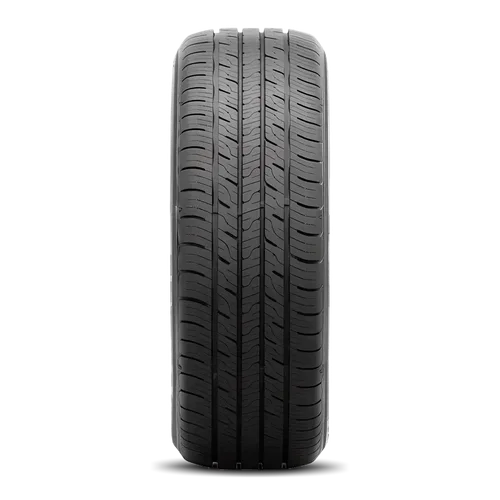
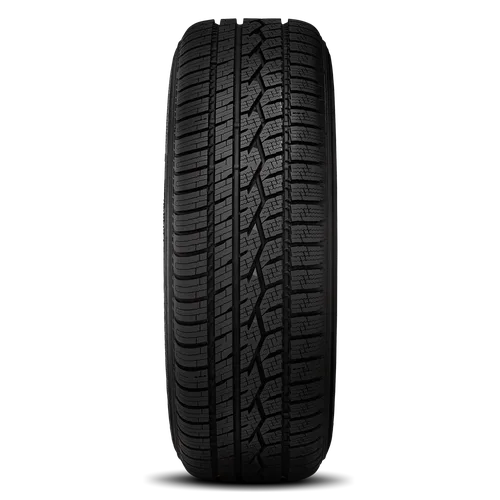
The Destination LE3 is Firestone's highway all-season tire for pickups, SUVs and crossovers, and it is the Firestone we stock most deeply. On the evidence of its grades, it is built for one job above all: lasting a long time on pavement.
- Treadwear 700. A very high grade, built for long tread life.
- Traction B. Lower than the A or AA grades on many touring tires, so wet braking is not its strongest point.
- Temperature B. Normal for a highway tire at legal speeds.
If your truck or SUV spends nearly all its time on paved roads and you want tires that last, the LE3 is a sensible, value-focused choice. If you regularly drive gravel or dirt, look at an all-terrain from the Destination family instead, and if you drive mostly in heavy rain, weigh that traction grade carefully.
The best Firestone tires to buy right now
The Destination LE3 is where our Firestone stock runs deepest, so here it is in three common sizes: one for compact and midsize crossovers, one for small SUVs, and one for midsize SUVs and light pickups.
Before you order, match the size, load index and speed rating to your door placard. If the code at the end of the size is unfamiliar, our guide to tire speed ratings and codes like 102H decodes it in a minute.
What the UTQG numbers on a Firestone tell you
Most passenger car tires sold in the United States carry a UTQG grade on the sidewall: a treadwear number, a traction letter and a temperature letter. Winter tires, temporary spares, light truck sizes and commercial truck tires are not graded, so a missing UTQG on a Transforce or FS591 is normal.
The treadwear number is assigned by the manufacturer from a controlled government test course. A 600 is built to wear about twice as long as a 300 in that test, but it is not a mileage promise, because real tread life depends on your driving, your roads, your alignment and your inflation. Traction is graded AA, A, B or C for straight-line wet braking, and temperature is A, B or C for heat resistance at speed.
| Firestone model | UTQG | What it tells you |
|---|---|---|
| Destination LE3 | 700 A B | Built for very long highway life; wet traction graded B |
| All Season | 560 A B | Long-wearing everyday touring tire |
| Transforce HT2 (LT sizes) | Not graded | Light truck tires are outside the UTQG system |
| FS591 and FS509 steer tires | Not graded | Commercial truck tires are outside the UTQG system |
The load index next to the size matters just as much as these grades, and our guide to tire load index explains how to read it.
Key takeaways
- Firestone is a good mainstream brand, founded in Akron, Ohio in 1900 and part of Bridgestone since 1988.
- Many Firestone tires are built in Bridgestone Americas plants in the United States.
- The 2000 recall covered specific P235/75R15 tire lines built over 25 years ago. You can check any tire's recall status on NHTSA's site.
- Its strongest everyday line is the Destination family for trucks, SUVs and crossovers.
- The Destination LE3 is graded 700 for treadwear but B for wet traction.
- Expect lower prices than Bridgestone, with less focus on refinement.
How Firestone compares to other brands
Against Bridgestone, its own sister brand, Firestone is the value-focused option. You get the same parent company and US manufacturing network for less money, and you give up some refinement.
Against the rest of the market, Firestone competes in the mainstream tier with brands such as Goodyear and Cooper, below the premium names on price and well above value imports in engineering backing. Every tire legally sold in the United States has to meet the same federal safety standards, so the choice is about consistency, tread life, comfort and price, not safe against unsafe. Our review of whether Goodyear tires are good covers one of the closest alternatives.
The verdict
Firestone is a good, honest mainstream brand with real American roots and Bridgestone engineering behind it. Its 2000 recall is part of its history and deserves to be understood rather than ignored, but it covered specific tires built a generation ago, and you can check any tire's status yourself. For trucks, SUVs and crossovers that live on pavement, the Destination LE3 is a long-wearing, fairly priced choice. If refinement matters more than price, look one step up to Bridgestone. Confirm the size, load index and speed rating against your door placard, and Firestone is a sensible buy.
Ready for new tires?
Search live prices in your exact size, shipped from our US warehouses.
Shop tires by sizeFrequently Asked Questions
Have questions? We've got answers.
Sources & references
- Firestone, company heritage and racing history
- Bridgestone Corporation, company history and the Firestone merger
- U.S. Tire Manufacturers Association, Bridgestone Americas member profile and US plants
- National Highway Traffic Safety Administration, EA00-023 Firestone Wilderness AT tires investigation report
Disclaimer: This content is for general informational purposes only and is not a substitute for professional automotive advice. Always confirm tire size, load rating, and inflation pressure against your vehicle's door placard and owner's manual, and consult a qualified tire professional before making changes to your vehicle's tires.