How Often to Rotate Tires: Schedule and Patterns
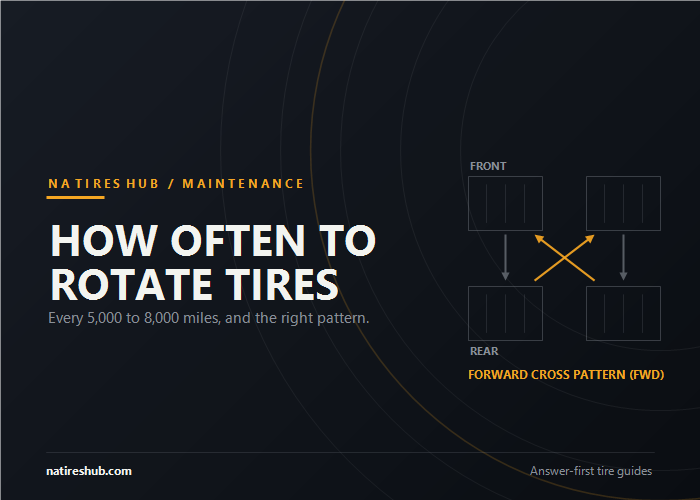
Table of contents
Tire rotation is the cheapest maintenance job you can do for your tires, and it is the one drivers skip most often. The problem is that the damage from skipping it does not show up for months, and by the time you can see it on the tread, the miles you lost are not coming back. Here is how often to rotate your tires, which pattern your vehicle needs, and how to tell when yours are overdue.
Quick answer
Rotate your tires every 5,000 to 8,000 miles, or whenever your owner's manual says, whichever comes first. Pairing it with every other oil change is the easiest way to remember. Rotation moves each tire to a new position so the set wears evenly, which protects traction and gets you closer to the tread life you paid for.
How often should you rotate your tires?
The general guidance is every 5,000 to 8,000 miles. Your owner's manual is the real authority here, because carmakers set intervals around the specific vehicle, and some are tighter than others. If you cannot find a figure, 5,000 miles is a safe default and lines up neatly with most oil change schedules.
Two things shift that number down. Heavy loads, towing, and a lot of city driving all wear the front tires faster, so rotate at the shorter end of the range. Performance tires on a powerful car can also wear quickly enough to justify rotating sooner. If your driving is mostly steady highway miles in a light vehicle, the longer end is usually fine.
Why tires wear unevenly in the first place
No tire on your car has the same job as the one next to it. On a front wheel drive vehicle, the front tires steer, put the engine's power down, and take most of the braking load, because weight shifts forward every time you slow. That is three jobs against the rear tires' one. The result is that fronts on a front wheel drive car routinely wear out well before the rears.
Rear wheel drive splits the work differently, with the rears driving and the fronts steering, but the imbalance is still there. Even all wheel drive vehicles wear unevenly, because steering and weight transfer never load all four corners equally. Rotation does not stop uneven wear. It moves each tire through the easy positions and the hard ones so the set ages together instead of one pair dying early.
How to rotate tires: the pattern for your drivetrain
The right pattern depends on what drives the wheels and what kind of tires you have. Using the wrong one is not dangerous, but it wastes the service.
| Vehicle or tire type | Pattern | What moves where |
|---|---|---|
| Front wheel drive | Forward cross | Fronts go straight back. Rears cross over to the opposite front. |
| Rear wheel drive | Rearward cross | Rears go straight forward. Fronts cross over to the opposite rear. |
| All wheel drive and 4WD | Rearward cross or X pattern | Rears forward, fronts crossed back, or all four crossed diagonally. |
| Directional tires | Front to back only | Each tire stays on its own side of the car. |
| Staggered fitment (different front and rear sizes) | Side to side | Swap left and right on the same axle, if the tires are not directional. |
| Full-size matching spare | Five-tire rotation | The spare joins the cycle so all five wear together. |
Two combinations cannot be rotated in the normal way. Directional tires in a staggered fitment can only change position if they are dismounted and remounted, which usually costs more than it saves. A temporary or space-saver spare never joins a rotation.
Directional and staggered tires: how to tell
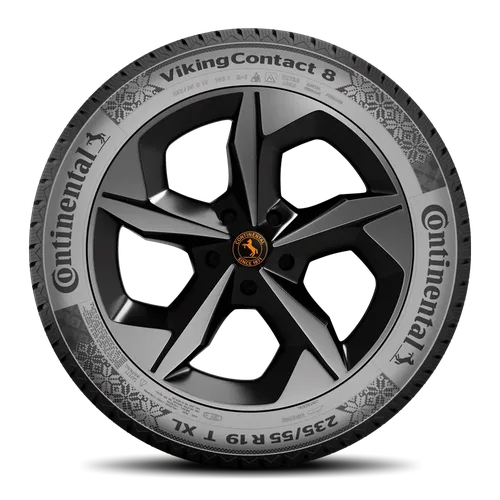
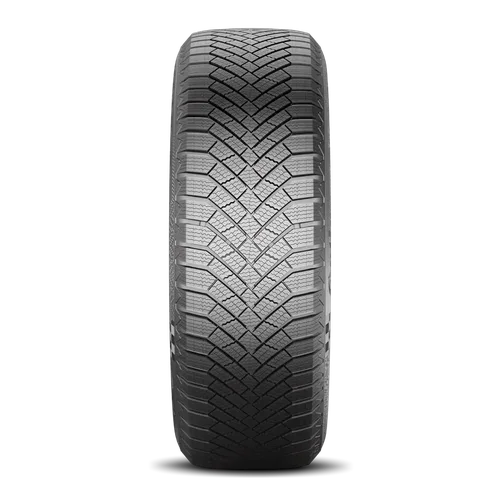
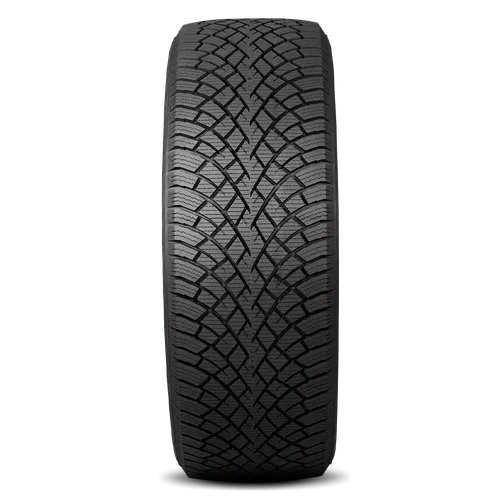
Look at the sidewall. A directional tire has an arrow or the word "rotation" pointing the way it must turn, and the tread pattern will look like a series of V shapes all pointing the same direction. If it is mounted backwards it loses a lot of its wet weather ability, which is the whole reason the pattern exists.
Staggered fitment means the front and rear tires are different sizes, which is common on sports cars and some performance sedans. Check the size printed on each sidewall. If the front and rear numbers do not match, front to back rotation is not an option.
When to rotate sooner than scheduled
The schedule is a baseline, not a rule. Rotate early if you notice any of these:
- A new noise. A rhythmic hum or growl that rises with speed often means a wear pattern has set in.
- Visible wear differences. If the fronts are clearly more worn than the rears, the set has already drifted apart.
- Vibration through the wheel or seat. This usually points to balance rather than rotation, but both get checked in the same visit.
- Before a long trip or a season change. A good moment to even things out and inspect the whole set at once.
- After heavy towing or hauling. Loaded miles wear tires faster than the odometer suggests.
Uneven wear that comes back quickly after a rotation is usually telling you something else is wrong, most often alignment or inflation. Rotation moves the tires. It does not fix what is wearing them.
What a proper rotation includes
A rotation is more than swapping wheels around. A complete service should cover all of this:
- Check and record the tread depth at each position, so wear rates can be compared next time.
- Move each tire to its new position using the correct pattern for the vehicle.
- Set the inflation pressure at every wheel to the figure on the driver-side door placard, since front and rear specifications are sometimes different.
- Torque the lug nuts to the vehicle's specification with a torque wrench, in a star pattern, never with an impact gun alone.
- Reset or relearn the tire pressure monitoring system if the vehicle needs it after wheels move.
- Inspect each tire for damage, uneven wear patterns, and the age of the DOT date code.
One step matters after you leave: re-check the lug nut torque after the first 50 to 100 miles. Wheels can settle slightly once they have been driven on.
Key takeaways
- Rotate every 5,000 to 8,000 miles, or follow your owner's manual if it specifies something tighter.
- The pattern depends on the drivetrain: forward cross for front wheel drive, rearward cross for rear wheel drive.
- Directional tires stay on their own side. Staggered fitments swap side to side, or not at all.
- A complete service includes tread depth checks, pressure set to the door placard, and torqued lug nuts.
- Rotation evens out wear. It does not fix alignment or inflation problems underneath it.
What happens if you skip it
The first cost is tread life. One pair wears out while the other still has plenty left, so you replace tires earlier than you needed to, and often end up buying pairs instead of sets. Many treadwear warranties also expect documented rotation, so skipping it can affect a claim.
The second cost is grip, and it matters more. A vehicle with two well worn tires and two healthy ones behaves differently in the wet than a matched set does, and the shallower pair is the one that will give up first. All wheel drive adds another wrinkle: some manufacturers specify how closely tread depths across the four tires must match, because a large difference makes the driveline work harder. That figure varies by vehicle, so check your manual before replacing just one or two.
Wherever your tread ends up, 2/32 of an inch is the legal minimum in most states, and wet grip falls off well before that point. If a rotation turns up tires already down at that level, rotating them will not help and it is time to replace. Our guide on how to check tire tread shows how to measure it properly, and you can find replacements in your size when the numbers say it is time.
The verdict
Set a rotation reminder every 5,000 miles and let it ride alongside your oil change. It is a short service, it costs little compared to a set of tires, and it is the difference between a set that wears out together and a set where one pair quits early. Use the pattern your drivetrain calls for, set the pressures from the door placard while the wheels are off, and check the tread depths each time so you can see the wear coming rather than discovering it.
Ready for new tires?
Search live prices in your exact size, shipped from our US warehouses.
Shop tires by sizeFrequently Asked Questions
Have questions? We've got answers.
Sources & references
Disclaimer: This content is for general informational purposes only and is not a substitute for professional automotive advice. Always confirm tire size, load rating, and inflation pressure against your vehicle's door placard and owner's manual, and consult a qualified tire professional before making changes to your vehicle's tires.