Starfire Tires Review
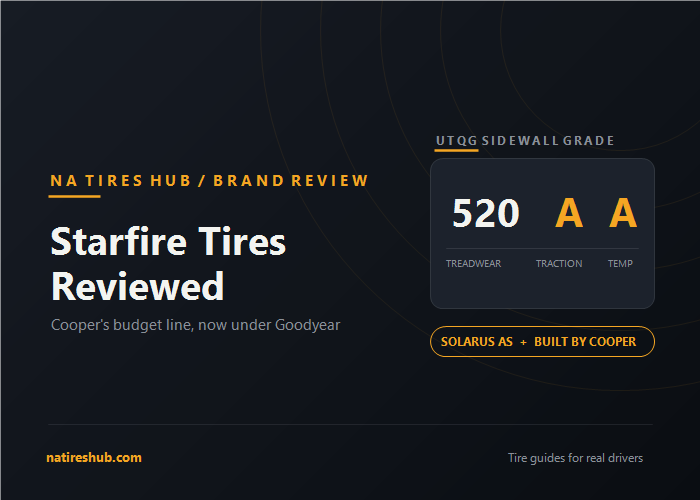
Table of contents
- Who makes Starfire tires?
- Where Starfire tires are made
- The Starfire lineup at a glance
- Solarus Classic: the cheapest way into new rubber
- Solarus AS: the mainstream all-season
- Solarus AP and HT: the truck and SUV side
- What the ratings actually tell you, and what they do not
- Warranty and what to check before you buy
- Where Starfire makes sense, and where it does not
- Value tires that ship nationwide
- The verdict
Starfire is a brand most drivers meet on a price list rather than in an advertisement. You search your size, a Starfire comes up noticeably under the names you recognize, and the fair question follows: who actually builds this, and what are you giving up? Here is a straight look at the lineup, what the sidewall ratings say, and who these tires genuinely suit.
Quick answer
Starfire is Cooper's budget brand, and Cooper has been owned by Goodyear since 2021. Most Starfire tires are built by Cooper, and a number of them are made in the United States. The range is almost entirely touring and highway rubber under the Solarus name, priced well below Cooper's own line.
Disclosure: New American Tires Hub is an independent tire retailer. We sell the Starfire tires discussed on this page and we make money when you buy from us. We are not affiliated with, sponsored by, or endorsed by Cooper Tire or Goodyear. The views below are our own, and we say where the brand falls short as well as where it does well.
Who makes Starfire tires?
This is the most searched question about the brand, and unlike a lot of budget labels, Starfire has a clear answer. Starfire is an associate brand of Cooper Tire and Rubber Company, which has produced it for decades as its value line. In June 2021 Goodyear completed its acquisition of Cooper, so Starfire now sits inside the Goodyear group.
That lineage is not a marketing inference. It is printed on the products themselves. A large share of the Starfire listings in our own catalogue carry it in the product name, in phrasing like "Solarus AS made in USA by Cooper" or "Solarus AP made by Cooper." When a budget brand is willing to name its manufacturer on the sidewall and in the listing, that tells you something useful: there is an established tire company standing behind the warranty rather than a trading name that disappears when you need to make a claim.
It also sets expectations correctly. Starfire is not secretly a Cooper tire with a different label. It is a separate, simpler product built by the same company, using older or less expensive tread designs, sold at a lower price. That is the trade, and it is a reasonable one. If you are weighing the budget line against the parent brand, our Cooper tires review covers what the extra money buys.
Where Starfire tires are made
Partly in the United States, and partly not, and the listings distinguish between the two.
Some Starfire products are described as made in the USA by Cooper. Others are described only as made by Cooper, without a country. Cooper operates US plants alongside overseas manufacturing, so both are plausible and the wording appears to be deliberate rather than careless. If domestic manufacture matters to you, read the specific listing for the size you need rather than assuming it applies across the brand. The distinction is real and it changes size by size.
You can see which is which on our Starfire brand page, where the full product name is shown on each listing.
The Starfire lineup at a glance
Nearly everything Starfire sells wears the Solarus name. The families split by what you are driving.
| Model | Built for | Typical fitments |
|---|---|---|
| Solarus Classic | Older cars and everyday commuting | 13 to 15 inch, some 16 |
| Solarus AS | Mainstream all-season touring | 14 to 17 inch |
| Solarus AP | Light truck and SUV all-position | 16 to 20 inch |
| Solarus HT | Highway tires for trucks and SUVs | 17 to 20 inch |
Two older lines, the SF-510 and the SF340, still show up in searches. They are largely out of production and we hold no meaningful stock of either. If you are replacing a set of those, the Solarus AS is the closest current equivalent in most passenger sizes.
Solarus Classic: the cheapest way into new rubber
The Classic is the entry point and it is where our deepest Starfire stock sits. It is a straightforward all-season touring tire aimed at 13, 14 and 15 inch fitments, which is to say older sedans, small commuter cars and second vehicles. Pricing generally runs from the low sixties to the low nineties depending on size.
This is the tire that answers a specific question well: your current tires have failed the tread test, the car is worth a few thousand dollars, and premium rubber costs a meaningful fraction of the vehicle. A new Solarus Classic on all four corners will out-grip a worn set of anything, and that is the comparison that actually matters. It is not a tire to buy for a long highway commute in heavy rain if your budget stretches further.
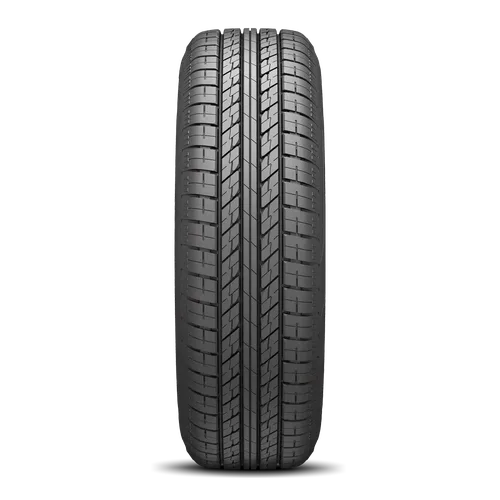
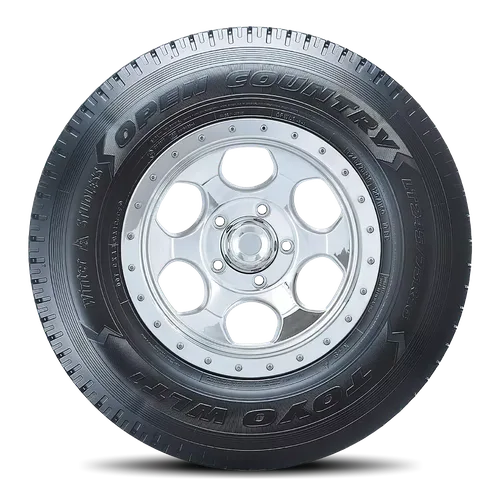
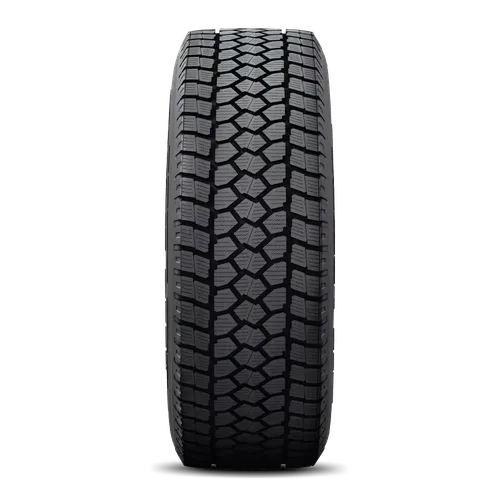
If your tread is down near the wear bars, that is the point to act rather than wait. Here is what we currently hold across the three Starfire families:
Solarus AS: the mainstream all-season
The Solarus AS is the volume model and the one most buyers will end up comparing. It covers 14 through 17 inch fitments, which takes in most compact and midsize cars on the road, and it is the model most often listed as made in the USA by Cooper.
Many of the Solarus AS listings carry a UTQG rating of 520 A A. Read that correctly: the 520 is a treadwear number assigned by the manufacturer from its own controlled-course testing, and it is a relative index rather than a promise of miles. The two A grades are the traction and temperature ratings, and A is a good result on both. A tire graded this way is a competent all-season, not a performance tire, and it is not a winter tire.
Solarus AP and HT: the truck and SUV side
The AP is an all-position light truck tire and the HT is a highway tire, both aimed at 16 to 20 inch fitments. Prices here run considerably higher, generally between roughly $155 and $215, because light truck construction costs more to build.
Our stock on both is thinner than on the passenger side. If you drive a half-ton pickup or a midsize SUV and you are set on Starfire, check your exact size before you plan around it, because the AP and HT do not cover the size chart as completely as the AS does. For heavier off-road use, or for flotation sizes Starfire does not offer, our Gladiator tires review is the better starting point.
One point worth stating plainly: LT sizes are not passenger car tires, so they carry no UTQG grade at all. If you are comparing an LT-sized Solarus AP against a passenger tire on treadwear numbers, you are comparing two things that were never measured the same way.
What the ratings actually tell you, and what they do not
Every tire legally sold in the United States meets the same federal safety standards, whatever it costs. A budget tire is not an unsafe tire. What separates a value brand from a premium one is engineering depth and consistency: how the compound behaves at the limit, how quickly wet grip falls off as the tread wears, how quiet it stays at 70 mph, and how evenly it wears over four seasons.
That is where Starfire sits honestly. It is competent rubber at a low price, built by a company with a long manufacturing record. It is not going to match a premium touring tire on wet braking distance or noise, and the brand does not claim it will.
Key takeaways
- Starfire is Cooper's budget brand, and Cooper has been part of Goodyear since 2021.
- A number of Starfire tires are made in the United States by Cooper, but not all of them, and the listing tells you which.
- Solarus Classic is the cheap entry point for 13 to 15 inch cars. Solarus AS is the mainstream all-season.
- Solarus AP and HT cover trucks and SUVs, at higher prices and with thinner size coverage.
- A UTQG treadwear number is a manufacturer-assigned index, not a mileage guarantee, and LT sizes have no UTQG at all.
- New budget tires beat worn premium tires. That is the comparison most Starfire buyers are actually making.
Warranty and what to check before you buy
Starfire products are sold with a mileage treadwear warranty on most passenger models, and our listings show a 50,000 mile figure on many Solarus AS sizes. Terms differ by model, by size and by seller, so read the warranty sheet for the specific tire rather than relying on a headline number. Mileage warranties normally require documented rotation at set intervals, and a claim is usually settled as a prorated credit rather than a refund.
Two other things are worth checking on any budget tire. Look at the DOT date code so you know how old the tire is before it goes on your car, and confirm the load index and speed rating match or exceed what your door placard calls for. Price is never a reason to drop below either figure.
Where Starfire makes sense, and where it does not
It makes sense if you are running an older car, replacing a worn set on a budget, buying for a second vehicle or a commuter that mostly sees dry miles, or if you want a known manufacturer behind a cheap tire rather than an anonymous import.
It makes less sense if you cover long highway distances in bad weather, if you want the quietest ride available in your size, if you are shopping a performance fitment, or if you need genuine winter capability. An all-season touring tire is not a winter tire, and no price makes it one.
Value tires that ship nationwide
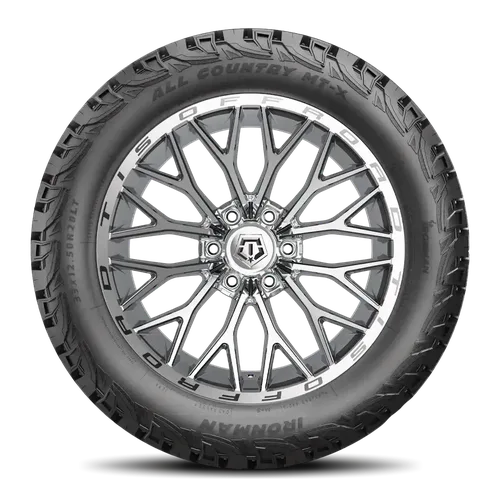
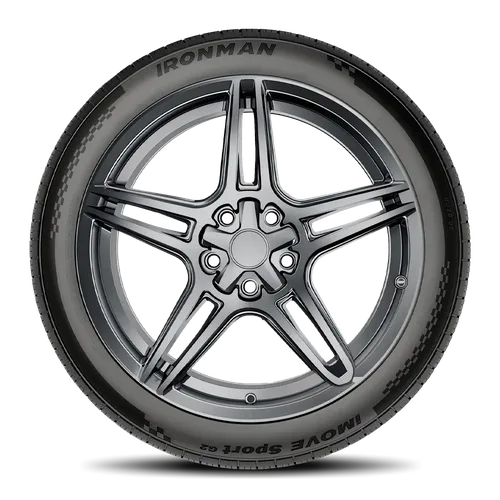
Starfire availability depends on your ZIP code, and some sizes ship only to part of the country. If the size you need is not available for delivery to you, these Ironman value tires ship from U.S. warehouses nationwide, for cars, crossovers and trucks:
In stock right now
3 in-stock products recommended for this guide
The verdict
Starfire is one of the more straightforward value brands on the market, mostly because it does not pretend to be anything else. You get a Cooper-built tire, frequently made in the United States, with normal ratings and a real warranty, at a price well under the parent brand. The Solarus Classic and Solarus AS are the models worth your attention, and they suit exactly the buyer who needs four new tires rather than two premium ones.
If you are choosing between a new set of these and a worn set of something better, buy the new set. If your budget genuinely reaches a premium touring tire and you drive a lot of wet highway miles, spend the difference. Both answers are defensible, and which one applies depends on your mileage more than your brand loyalty.
Ready for new tires?
Search live prices in your exact size, shipped from our US warehouses.
Shop tires by sizeFrequently Asked Questions
Have questions? We've got answers.
Sources & references
Disclaimer: This content is for general informational purposes only and is not a substitute for professional automotive advice. Always confirm tire size, load rating, and inflation pressure against your vehicle's door placard and owner's manual, and consult a qualified tire professional before making changes to your vehicle's tires.